There is a turning point in autumn when winter stops being a vague date on the calendar and starts becoming something we can feel.
The mornings are darker, and the air is beginning to develop that familiar sharp edge. We might find ourselves reaching for a heavier sweater before heading out the door, and eventually there comes a morning when a sweater simply isn't enough.
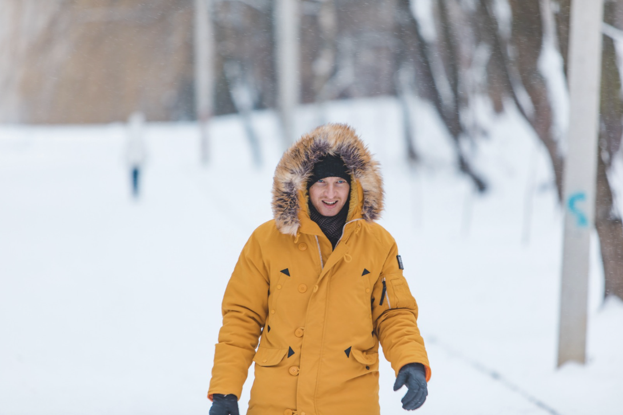
So we put on a coat.
We don't stand at the door and try to negotiate with the weather.
I really don't have time to wear a coat today … I was hoping to get through November without one … I wasn’t planning to wear a coat this week.
The cold doesn't care one bit about our feelings, our desires, or our plans. It has established a boundary, and that boundary is remarkably clear: this is how cold it is outside. Our job isn't to change the temperature. Our job is to respond to it. There is something useful in that as we think about our own boundaries.
We often negotiate with ourselves
Most of us are reasonably good at recognizing other people's boundaries. If a friend says they are too tired to go out, we can accept that. If a colleague says they can't take on another task, we understand. But when it comes to our own limits, things can get complicated.
How often have we been tired and still told ourselves we really should do one more thing? We can have a completely full calendar and yet we agree to another commitment. We can be absolutely certain that a particular task or situation is draining us and yet we still feel that we need permission - or at least an extremely good reason - before we are allowed to step back.
Sometimes it seems we believe that a boundary only counts if we can prove that we need it. But the weather doesn't require us to prove that we're cold. If the temperature has dropped below what our bodies can comfortably tolerate, we put on a coat. We don't need to justify it, and we don’t need the approval of anyone else. Our personal boundaries can work in much the same way.
I don't have the capacity for this - is enough.
I need some time to myself - is enough.
I can't take that on right - now is enough.
A boundary isn't a punishment
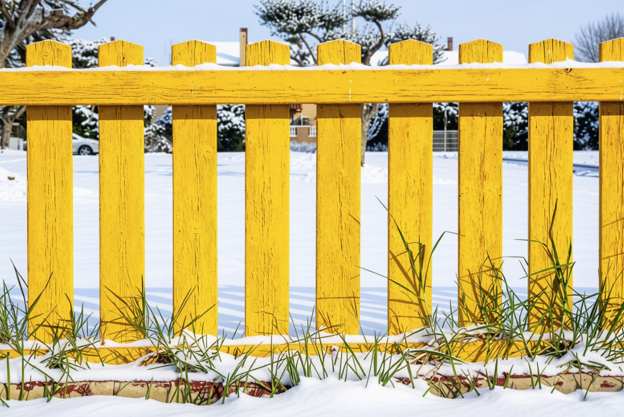
The word "boundary" can sometimes sound harsh. It brings to mind walls, fences, and closed doors - all keeping people at a distance. But a boundary doesn't have to mean pushing someone away.
A coat is a boundary, too. It doesn't mean we're refusing to participate in winter, it simply gives us some protection from conditions that could otherwise make us uncomfortable or unwell. In the same way, a personal boundary can help us stay connected to the people, work and activities that matter to us without becoming completely depleted by them.
We can love our family and still need an evening alone.
We can care deeply about our work and still need to leave at the end of the day.
We can enjoy helping others and still have limits on how much we can give.
A boundary doesn't mean ‘I don't care about you.’ It simply says ‘I need to take care of myself, too.’
Our boundaries can change with the seasons
Just as nature changes with the seasons, so too can our boundaries. In summer, we may happily spend an evening outside after work. In November, when it's dark before dinner and the temperature has dropped, we may just want to go home and curl up in front of the TV instead. Our capacity isn't the same all year round - and nor does it have to be. That's not inconsistency, it’s adaptation.
There are times in our lives when we have more energy, more time, more emotional capacity or more room for other people's needs. There are other times when we need to draw back and stay a little closer to home. We don't have to maintain exactly the same level of activity simply because we've managed it before.

Winter invites us to notice this. The trees aren't failing because they're no longer covered in leaves. The garden isn't failing because it has stopped producing tomatoes. The landscape is responding to the conditions around it.
How would it feel to give ourselves permission to do the same?
The uncomfortable part of a boundary
We’ve talked of setting boundaries as if they are as easy as slipping on a coat, but the reality is that saying no to someone we care about can be much harder. Even contemplating doing so can induce a creeping sense of guilt. We worry that someone will be disappointed, or think we are being selfish or difficult. We feel the urge to explain ourselves until the other person agrees that our boundary is reasonable.
But that feeling of discomfort doesn't mean we're doing something wrong. Sometimes it is simply what it feels like to do something unfamiliar.
If we've spent years being the person who says yes to other people, saying no may feel strange. If we've always answered messages immediately, allowing ourselves to wait may feel uncomfortable. If we've habitually put everyone else's needs ahead of our own, making room for ourselves can feel unnatural to begin with.
That doesn't mean the boundary is wrong. It means we're learning something new. There will always be people who are comfortable with us having few or no boundaries, because it makes their lives easier. If we wait for everyone around us to approve of our limits, we may be waiting a very long time.
A boundary doesn't need someone else's permission to be valid. It needs to reflect what we need in order to take care of ourselves.
Start small
Boundaries don't have to begin with dramatic conversations or major life changes, especially if we are new to having them at all. They can be surprisingly ordinary.
Not answering an email or text the moment it arrives.
Declining an invitation when you don't have the energy.
Leaving work at the time you said you would.
Spending an evening without obligations.
Saying, "I'll have to think about that," rather than automatically saying yes.
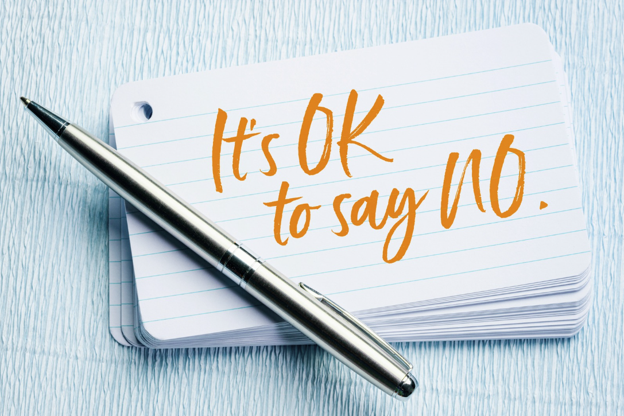
These small choices give us an opportunity to prioritize our own energy levels before we reach the point of complete exhaustion. And that is one of the most useful things about boundaries - they aren't only about what we do when we've had enough. They can help us avoid getting to that point in the first place.
When winter says no
Winter is a particularly uncompromising teacher. It tells us - it doesn’t ask - when we need a warmer coat. It tells us when the roads aren't safe. It tells us that there will be days when going outside requires a little more preparation than it did a few months ago. We can grumble about it. We can wish it were warmer. We can look forward to spring.
But we still put on the coat.
Our own boundaries deserve some of that same straightforwardness too. We don't have to wait until we're completely overwhelmed before acknowledging that something is too much, and we don't have to earn the right to have limits. Sometimes the circumstances simply are what they are. The day is full or our energy is low. Our attention is needed elsewhere. We need to say no. And that's okay.
As the days grow colder and we begin reaching for our coats, perhaps winter can offer us a simple reminder: a boundary isn't always a rejection, it's the layer of protection that allows us to keep going.
Winter doesn't apologize for being winter. We don't need to apologize for having limits, either.
If setting boundaries feels difficult, you don't have to figure it all out on your own - I'm here to help.
Rebecca
PS - If you’d like to read more about mental health and wellness, check out these articles:
Glimmers: Illuminating the Path to Positive Mental Health