
Goldenrod: Medicine from the Field’s Edge
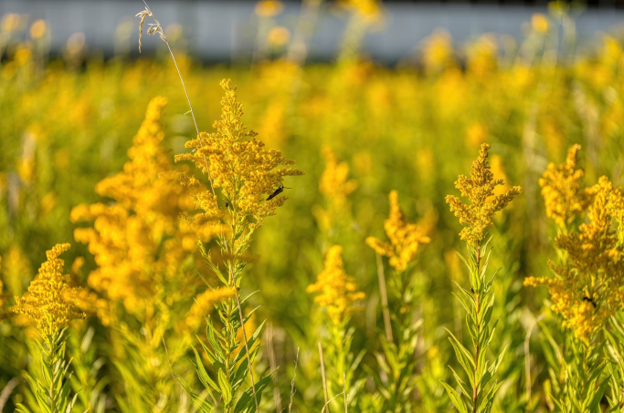
When I first came to Canada as a teenager in the late 1980’s I settled with my family in a rural corner of the Ottawa Valley surrounded by farmland and forest that stretched farther than my English born imagination could comprehend.
I remember that first summer, visiting an elderly lady who, in her nineties, still lived on the farmstead she had been born on. As we shared fresh baked biscuits and tea on her front porch, she told me how her family, having no money to visit a doctor during the Great Depression of the 1930’s, had relied on many of the wild plants around them. “They didn’t call it herbal medicine back then,” she said. “It was just what you did.”
She gestured to stand of deep yellow flowers bordering a field, “Look there,” she said. “That’s goldenrod, and a weed to many, but that’s an easy one to remember because it’s yellow. Pee and snot, that’s what it’s good for.”
A few years later I remembered her words and looked up goldenrod in one of my shiny new herbal medicine books. She was right. Although not put quite so bluntly, goldenrod (Solidago spp. - meaning ‘species plural’) is indeed an excellent remedy for many ailments of the bladder and urinary tract and also for upper respiratory and sinus infections.
Goldenrod Species
Goldenrod is not a single plant, but a genus, a group of closely related plant species within the same family. There are over 100 species in North America, with around 30 found in Ontario, and more than a dozen in Eastern Ontario alone.
The most common in this region include:
Canada Goldenrod — Solidago canadensis
Tall Goldenrod — Solidago altissima
Giant Goldenrod — Solidago gigantea
Gray Goldenrod — Solidago nemoralis
Early Goldenrod — Solidago juncea
Zigzag Goldenrod — Solidago flexicaulis
In the field, they can be surprisingly difficult to distinguish from one another. The differences are often subtle, with only slight variations in height, leaf shape, or how the flowers arrange themselves along the stem.
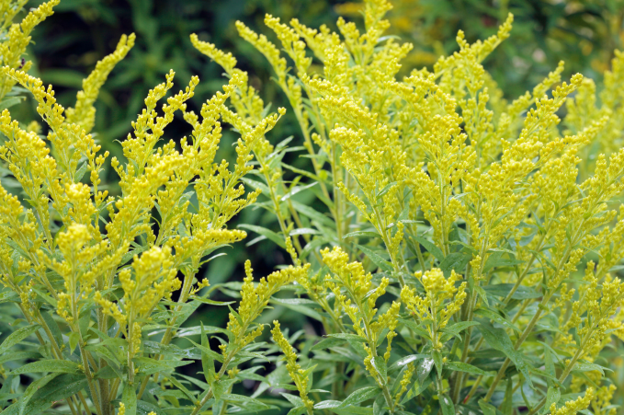
Fortunately for the herbalist, this is a genus where nature is more generous than precise. While botanists may separate them carefully, medicinally they are used in much the same way. There are subtle variations among the species, but the overall actions are the same.
Goldenrod is best harvested in late summer just as the flowers are beginning to open and are still tinged with a little green. If picked when in full bloom, the flowers have a distressing tendency to explode overnight into tiny balls of grey fluff – like miniature dandelions. This is not a problem if you intend to tincture the fresh plant immediately after harvesting, but be aware that if you plan to dry it indoors, you will be finding grey fluff around your home for months afterwards.
I generally pick the flower head and about a foot or so of the stalk, leaving the bottom half of the plant where it is, as the leaves nearest the ground tend to get nibbled on by insects.
Goldenrod’s Properties
Goldenrod is, above all, an astringent plant, drying up excessive secretions by toning and tightening tissues – think runny noses and watery eyes. Its other properties include:
anti-catarrhal – helps reduce excess mucus (catarrh simply means thick or excessive mucus, especially in the respiratory system)
anti-inflammatory – helps calm irritation and swelling in tissues
antimicrobial – discourages microbial growth
diaphoretic – supports the immune system’s fever response by increasing peripheral circulation, and opening skin pores to promote perspiration
carminative – relieves gas and supports digestion
diuretic – increases urine flow and supports kidney/bladder function
vulnerary – supports wound healing
Respiratory Support
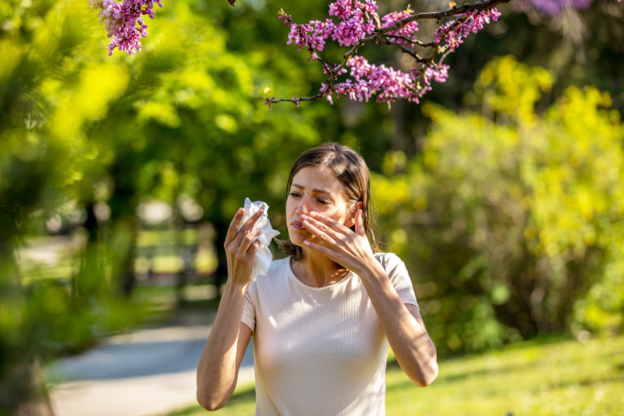
Just as my elderly neighbour told me, goldenrod has a long history of use for the upper respiratory tract, for any condition where there is excess mucus. This includes sinus infections, seasonal allergies, runny noses, post-nasal drip, and sore throats. The connecting thread here is runny, drippy conditions. If on the other hand, you have a sinus infection where it feels as if your sinuses are full of solid cement, and your nose feels dry and irritated, goldenrod won’t be of much help, and could make things even dryer and more uncomfortable.
It combines well with:
Mullein and ginger or peppermint for coughs and colds
Mallow, raspberry leaf, or sage for sore throats
When paired with nettle, it can be especially helpful for seasonal allergies.
Goldenrod is often blamed for causing seasonal allergies, but in fact all species of this plant are insect pollinated and so do not release their pollen to the air – the most common cause of hay fever. Ragweed (Ambrosia spp.), an inconspicuous plant that flowers at the same time as goldenrod, releases vast amounts of tiny pollen grains in the air and is more often than not the real culprit behind itchy eyes, scratchy throats and runny noses.
Urinary Support
Goldenrod has a long-standing role in supporting the urinary system. As both a urinary antiseptic and a diuretic, it helps reduce microbial load while encouraging healthy urine flow to flush out microbes. The astringency of goldenrod also helps to tighten the tissues of the urinary system, which makes them less hospitable to microbes.
When combined with a soothing plant such as marshmallow, it is a wonderful remedy for urinary tract infections, cystitis, interstitial cystitis and related conditions of the urinary system. It is also a trophorestorative to the kidneys. A trophprestorative is a herb that nourishes, repairs, and restores the structure and function of specific tissues or organs over time.
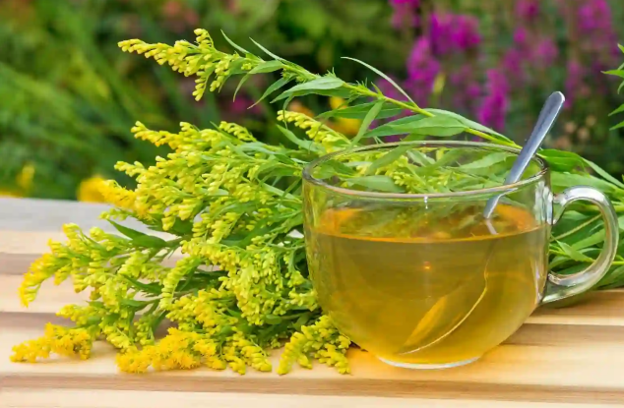
And while we are discussing this area of the body, it would be a good time to mention that the goldenrod contains saponins - plant compounds that can have antifungal properties. These are traditionally associated with support for Candida overgrowth. In practice, goldenrod may be used as a tea, tincture, or as a wash or sitz bath for local application. For oral candida infections, swishing with Goldenrod tea for a couple for minutes can be helpful.
External remedies
The genus name “Solidago’ comes from the Latin words solidus, meaning "whole", and ago, meaning “to make”. Together, they translate to "to make whole" referring to the plant's long history as a wound-healing remedy.
Goldenrod’s astringency and anti-microbial properties makes it valuable for treating wounds, minor burns, bleeding and eye infections such as conjunctivitis. A compress soaked in a warm infusion can be applied on the affected area to good effect. Recently, Goldenrod has gained popularity in the treatment of muscular aches and pains. A warm or cold infused oil may be made into a salve for these purposes.
More Than a Roadside Flower
Goldenrod is a plant many of us are used to seeing on roadsides, in fields and waste ground and perhaps it tends to be made inconsequential by its familiarity. It is neither exotic, nor the darling of a media craze, but it is quietly useful and a reliable friend to those who take the time to acquaint themselves with it.
Rebecca
PS - If you’d like to discover other medicinal plants, check out these articles:
What to do with Weeds - the Fall Edition
Cottonwood Buds - Winter Medicine
What to do with Weeds - Spring Edition
Violets - Gentle Spring Medicine
What to do with Weeds - Summer Edition
If you’d like to learn more about herbal medicine and remedy making, here are some more articles:
Wild Remedies: A Guide to Foraging and Using Medicinal Weeds